
Crystal Shawanda
Canada
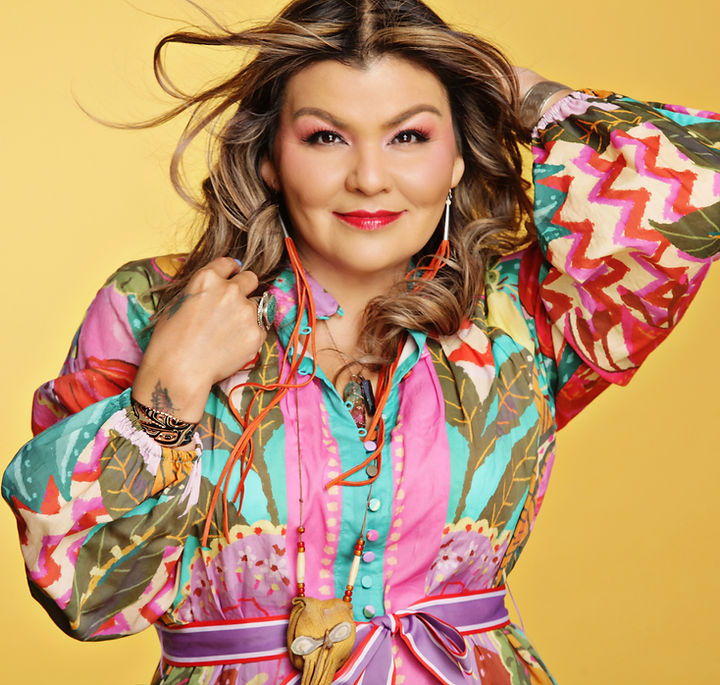
Born and raised in Wikwemikong First Nation, on Manitoulin Island, in Northern
Ontario, Crystal was introduced to the blues by her eldest brother and to old-time
country by her parents. “I was also into other styles of music that led me to the blues,”
she says, citing everything from Elvis Presley’s “Hound Dog,” written by Big Mama
Thornton, to R&B-pop star Monica’s “Misty Blue,” by Dorothy Moore.
“I was one of those kids who read the liner notes,” Crystal says. “I wanted to know
everything, who are the songwriters, the musicians, the producers, the engineers. I'm
always wanting to know who are the originators, who are the mothers of invention,
who inspired all of us? I’m a purist at heart, so I was always diving back to learn from
the masters, like Etta James, as far as vocalists; Muddy Waters, as far as feeling; and
Buddy Guy, as far as stylists who have a lot of swagger.”
And yet Crystal’s first foray as a professional singer was in country music, not blues.
She was in her early 20s and had immediate success after signing a U.S. record deal
with RCA Nashville. 2008’s Dawn of a New Day, featuring the single “You Can Let Go,”
reached No. 1 on the Canadian Country Album chart and No. 16 on the Billboard Top
Country Albums, the highest charting album by a full-blooded Canadian Indigenous
country artist (in the SoundScan-era).
The following year she left the label and created her own, New Sun Records. Her first
release was the holiday album I’ll Be Home For Christmas. Her next country album
was 2010’s Just Like You, which won a 2013 Juno Award for Best Aboriginal Album,
before she made the change to the blues with 2014’s The Whole World’s Got The Blues.
Two years later, in quick succession, came 2016’s Fish Out of Water and 2017’s Voodoo
Woman, then recognition as a bonafide blues talent with 2020’s Church House Blues,
which won the 2021 Juno Award for Best Blues album.
“I love all styles of music, but there was just always something drawing me to the
blues,” she explains. “I had a country hit on the radio, and I would show up at country
music festivals and I'd do a BB King cover or Buddy Guy or Etta James. Within country
music, as much as I loved it, I had to restrain my voice a lot. It's very hard to hold back,
and sometimes it was exhausting, whereas with the blues, I could just let it fly.”